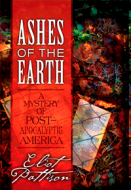
I’ve been asked more than once why I would write a novel that is such a sharp departure from my prior works. The simple answer is that Death of Days may be a departure with respect to its characters and settings, but not with respect to central themes—it examines the same issues with a shift in faces and context. I have done a series set in contemporary Tibet, a series set in 18th century America, and a novel set in a post- apocalyptic future, and they are all built around characters locked in fights for justice against seemingly overwhelming obstacles. They all examine the nature of justice, the dehumanizing role of monolithic institutions, and the many qualities of compassion. Stated another way, they are all centered on a long, inquiring view of the human journey. Death of Days and its predecessors may revolve around sharply different settings, and characters, but they all raise questions about how we endure, and preserve our identity and dignity, in the face of severe adversity. I have always believed that the best fiction provokes readers to ask questions they had otherwise not thought to consider. At the end of a journey through a treacherous landscape of spies, tyrants and global criminals, Death of Days ultimately asks the greatest of “what if” questions: What if our civilization fell? Perhaps this is no longer an entirely academic query. Seldom do we hear mention of projects like Germany’s Barbarastollen deposit, an underground vault that preserves a billion documents and artifacts encompassing German history and culture, or Norway’s huge Svalbard vault in the Arctic north meant to preserve the seeds of the earth’s plants. Yet these are real projects, reflecting somber consideration by small groups of experts about future human scenarios.
Death of Days builds to this alarming question by weaving together dynamics that are all too familiar in today’s world: the exercise of unaccountable, near absolute power, the erosion of institutions founded to protect our culture, corruption and criminality on a global scale, assaults on objects reflecting our human heritage, and scrubbing of history books to serve political ends. These trends and forces gradually combine in the novel, and steadily raise the stakes in the cryptic mission undertaken by my protagonist Cato Pike.