ABOUT THE BOOK
Austin Macauley Publishers; August 14th 2026
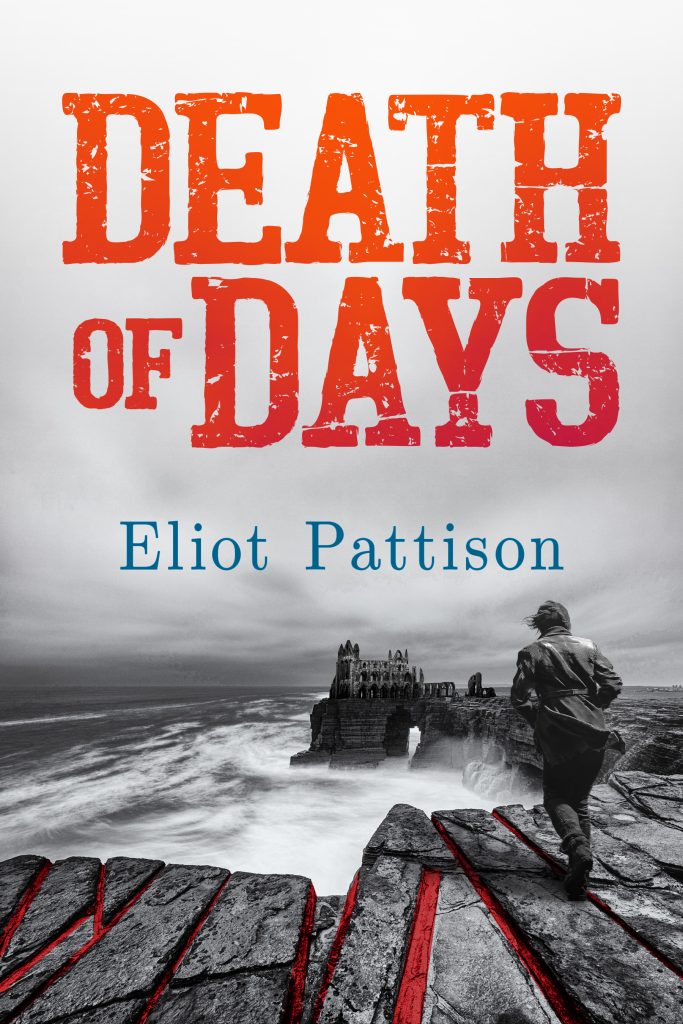
Death of Days is not simply a compelling thriller with a cast of unforgettable characters; it raises provocative questions about the eroding foundations of nations and the very nature of truth and the human experience in the post-modern world. Ultimately, the troubled but relentless Cato confronts a death that can never be solved.
Cato Pike is an embittered veteran of Washington’s intelligence services who has walked away from his covert world—the “labyrinth”—because he no longer trusts its leaders. When his estranged father, a renowned historian, summons Cato to his hospital bed to beg a favor, Cato grudgingly agrees and travels to an abbey in Scotland’s storm-tossed Orkney Islands to retrieve a mysterious package.
His errand, and his life, abruptly change when he discovers the aged Scot who was to hand over the package has been tortured and murdered. Soon afterward, a nun from the same abbey is murdered in New England while taking delivery of a second package. The monks and nuns of the remote abbey have somehow stumbled into Cato’s labyrinth—his world of violent intrigue.
His quest for the packages, and the killers, soon becomes a deadly competition with assassins and ruthless intelligence agencies. Cato must rely on a trail of arcane historical clues and a surly alcoholic Scottish detective to stay ahead of them. When one of his new enemies, placed high in Washington, orders his arrest on treason charges, Cato becomes a fugitive—and the only person alive capable of deciphering the bizarre clues that will lead to the truth.
To answer the dangerous riddles, Cato must penetrate secret archives of the German intelligence service and probe Neolithic ruins in the Scottish Isles.
Ultimately, Cato discovers that the mysteries are linked to a treacherous legacy of the Cold War and the two-thousand-year-old murder of astronomers in Kurdistan. The deepest mystery of all becomes why the eccentric monks and nuns of Orkney are risking their lives for ancient artifacts and Cold War files. “Human continuity” is their cryptic explanation—words that take on haunting significance when Cato finally uncovers the startling truth about the abbey and its mission.
BUY THE BOOK
BUY FROM: Amazon |
MEDIA: Interview with Eliot
1. What would be a simple description of your new novel Death of Days?
On its surface the novel might be described as a thriller in which a disillusioned clandestine agent pursues the mysterious enterprise behind murders linked to a remote Scottish monastery. A deeper explanation would be that it is centered on a struggle between outcasts from the global intelligence community, one side using its skills for a noble humanitarian cause, the other for criminal gain on a global scale. Ultimately the novel is about a high stakes struggle to protect the human legacy in a world of fading nations and crumbling institutions.
2. This novel seems quite different from your two series set in Tibet and colonial America. Why this big departure from your prior work?
The readers of those series know that while their characters face very different types of adversity—from repressive Chinese prisons to brutal colonial slavemasters—their stories ultimately revolve about the courage of individuals and the triumph of the human spirit. While the background of Death of Days is more current, reflecting today’s global tensions, it too is about timeless values and the struggle of courageous individuals against soul-crushing forces.
3. At times the pursuit in this novel feels like a chase through history. Why is history so integral to your premise?
Pursuing a puzzle in which the pieces can’t be aligned without historical knowledge seemed the perfect way to engage the reader in questions about human progress and the legacies of past cultures. Is it acceptable, for example, to destroy ancient artifacts in order to achieve a short term political victory? Who are the proper custodians of such artifacts when states abandon them? Our society has devalued history, and in doing so devalues itself. None of the issues on today’s world stage can be meaningfully addressed without grasping their history. Without history the human experience becomes hollow. History is a vital part of the tension in the novel, as in our lives. We cannot know where we are going if we do not know where we have been.
4. Your leading character embodies many contradictions, as comfortable with a firearm as with ancient Greek scholars. Why did you chose this complex outcast to deal with a global conspiracy of corruption and death?
Cato Pike, who first appeared in my last Inspector Shan novel, is skilled in the dangerous arts of espionage but now living in embittered self-exile from the world and his family. Being something of a renegade becomes a strength, for he has to work outside, even against, powerful geopolitical institutions. Those clandestine skills play a role in his quest but he gradually realizes that he is not so much pursuing savage killers as he is uncovering a dark, inescapable, and liberating truth.
5. This is a deeply textured novel with many messages. What do you want readers to ultimately take away from it?
I want readers to be engaged and entertained, but also provoked into considering deeper issues. Additionally I hope to add some education to the reading experience–there are many subtle lessons about history woven into the tale. But ultimately the novel raises haunting questions that no one wants to ask. If readers continue to contemplate those questions after finishing the novel, I will have accomplished my goal.